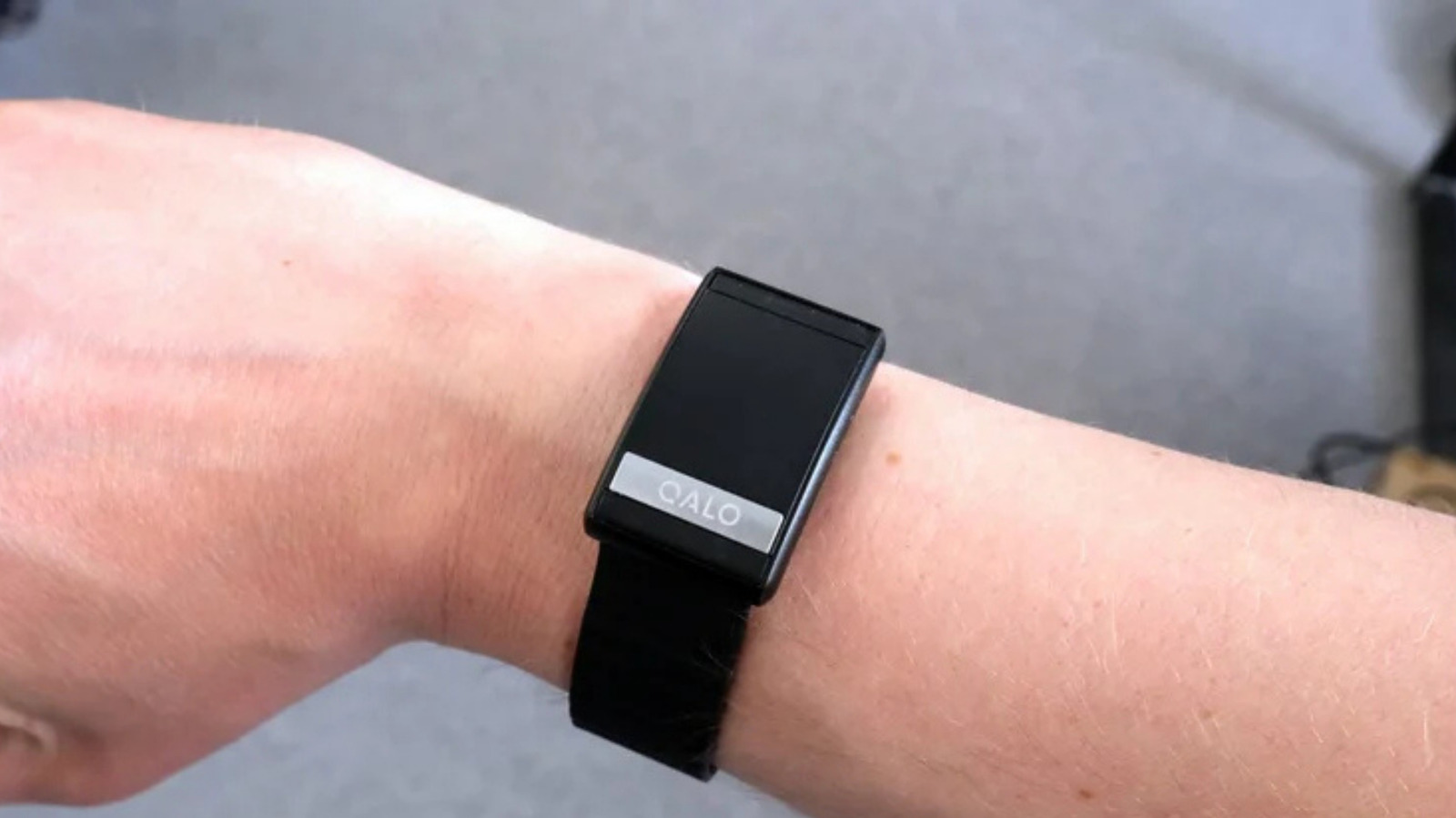
Qalo and Garmin have each released a screenless fitness band priced at roughly $200, setting up a direct comparison between two wearables that neither require a paid membership to use. Garmin announced the Cirqa on July 21, and Qalo followed with the SL-1 on September 29, putting the two launches 10 weeks apart. Their prices sit four cents apart: $199.99 for the Cirqa and $199.95 for the SL-1. Neither band has a display, which separates both from Whoop, whose bands carry a membership starting at $199 per year. Both are also eligible for HSA and FSA spending.
The spec sheets diverge on several fronts. Qalo advertises 12 or more days of battery life for the SL-1, while Garmin lists up to 10 days for the Cirqa; in testing, the SL-1 still had more than half its charge after a week. Garmin rates the Cirqa at 5 ATM, a rating its manual ties to pressure at a depth of 50 meters, and includes a Swim activity, whereas Qalo's product page describes the SL-1 as water-resistant to 10 meters and warns against scuba diving and deep-water pressure. Garmin lists more than 80 activity types to Qalo's 54, and the Cirqa has an optional paid software tier called Connect+ at $6.99 per month or $69.99 per year that covers features including AI-generated insights, nutrition logging and guided workouts. Qalo requires no subscription and offers a free companion app.
On hardware, Qalo lists the SL-1 at 18 grams and 10.5mm thick without specifying whether the strap is included. Garmin puts the Cirqa at 14.8 grams without the strap and 20.7 grams with the smaller wristband. The SL-1 uses a silicone strap with a woven option sold separately, while the Cirqa uses a fabric hook-and-loop band in two wrist sizes and can be worn on the upper arm with a long arm band. Garmin offers four colors and fits the Cirqa with a single side button, a multicolor status LED and vibration alerts for alarms and a Find My Band feature; Qalo's support pages describe only a charging status light.
Both bands carry an optical heart rate sensor and measure blood oxygen, skin temperature, heart rate variability, stress and sleep stages, and both offer menstrual cycle tracking. Neither has built-in GPS, though the Cirqa can use a paired phone's GPS. Qalo condenses sleep, HRV, movement and stress into a daily Q Score from 1 to 100, while Garmin spreads its analysis across Body Battery, Training Readiness, training status, VO2 max and HRV status. The SL-1 shares one profile with Qalo's smart rings, which the company also sells without a subscription.
In testing, Qalo's claimed automatic activity detection did not pick up workouts on its own, not even walks, while the Cirqa's automatic detection worked well enough that manual recording was rarely needed. Qalo also says its movement tracking is up to 12.5 percent more accurate than popular alternatives, a claim the SL-1 review did not test; the Cirqa review counted Garmin's accuracy among the band's strengths. Testers found the Cirqa's single button a irritation because a mistimed press to dismiss an alarm starts a workout, and found the Garmin Connect app heavy on data and light on interpretation. The SL-1's magnetic clasp could come loose if a sleeve caught it at the wrong angle, and its app does little beyond aggregating collected data.
At the same price, the Cirqa gets the basics right and would be the pick of the two, while the SL-1 would make more sense as a first screenless tracker if it were cheaper. The Cirqa scored 7.4 out of 10 in testing and the SL-1 scored 6.8.
More gadget news from TechManNews.