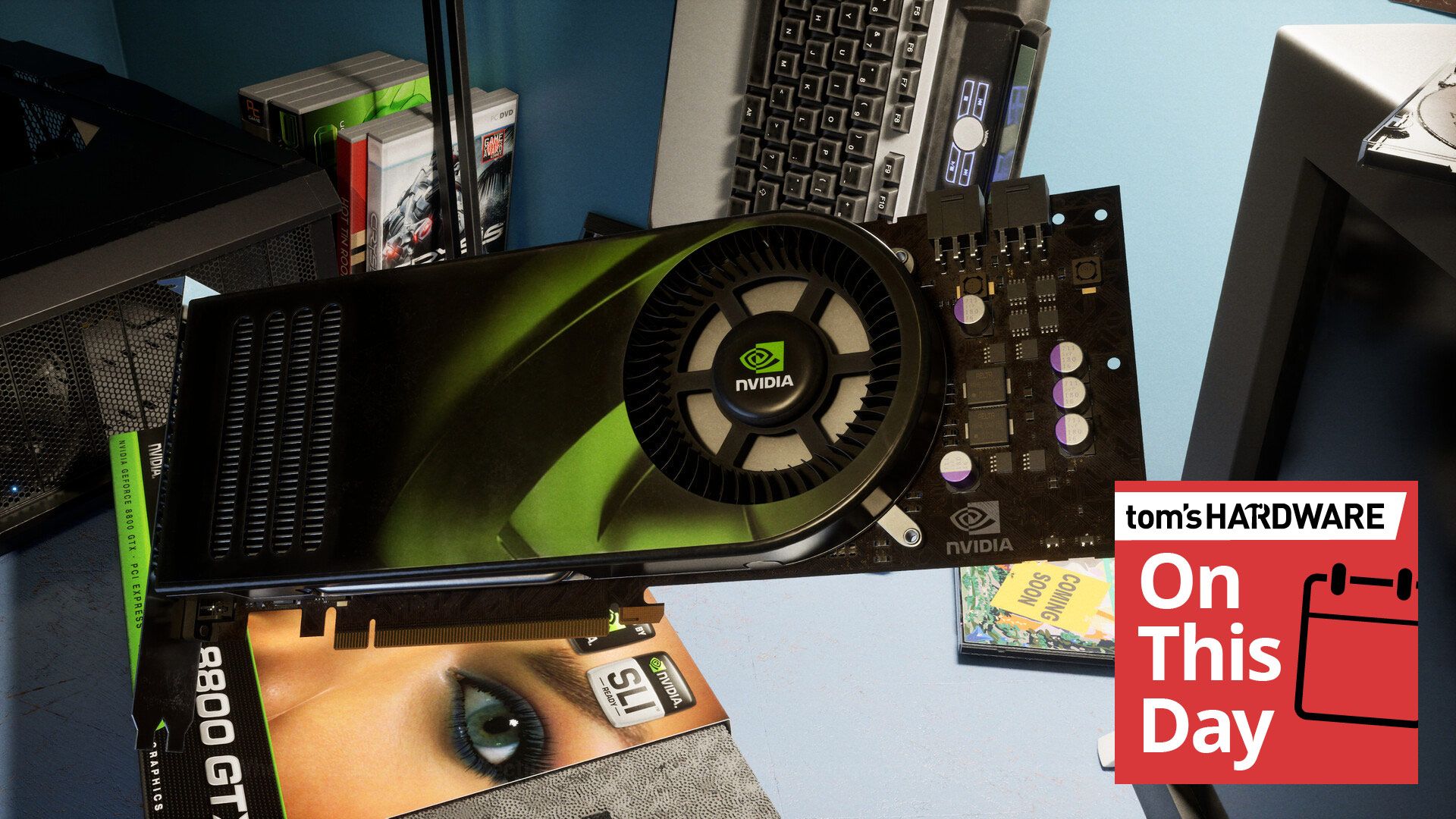
Nvidia’s GeForce 8800 GTX reached its 20th anniversary on Sunday, and the company is marking the occasion with a playable Steam homage called GeForce 8800 GTX - 20 Years of a Legend. The demo was built by Dylan Browne, a senior special effects artist who often works in Unreal Engine. It places the user in a gaming den and asks them to install the shiny new GPU into an era-accurate PC tower, with hidden Easter eggs promised as an extra layer of fun.
That nostalgia comes with 2026 hardware demands. According to the Steam page, an RTX 4070 is the minimum for acceptable performance, and the download also requires 32GB of RAM and 30GB of free storage. Nvidia says the demo is stuffed with its current graphics technology, including DLSS 4.5 with Dynamic Multi Frame Generation, Ray Reconstruction, path tracing and Mega Geometry. The result is described as era-appropriate graphics powered by the most advanced graphics tech available two decades after the 8800 GTX arrived.
Nvidia launched the GeForce 8800 GTX with 128 shader units at $599 and the 8800 GTS with 96 shader units at $449. The cards led the DirectX 10 era, speeding up existing PC titles and enabling next-gen visuals in new DX10 software. Contemporary reviews called them amazing for their performance and DX10 promise, and praised the G80 architecture for bringing CUDA to consumers and making the GPU something much more than a frame rendering device.
The demo appears to show Windows Vista running on the gaming den PC, an operating system that reached retail a few months after the 8800 GTX. The card and Vista did coexist for years, with many buyers putting GeForce 8800 GTX and 8800 GTS boards into Vista PCs from 2007 onward. Crysis arrived on PCs in late 2007, a year after the G80 architecture cards debuted.
Driver support for the GeForce 8800 GTX and GTS ended roughly a decade later. By then DirectX 11 hardware and games were mainstream, leaving older graphics designs obsolete for the latest AAA PC titles. For US gamers, the anniversary demo is a downloadable Steam release that requires a recent RTX-class card to run.
More hardware news from TechManNews.