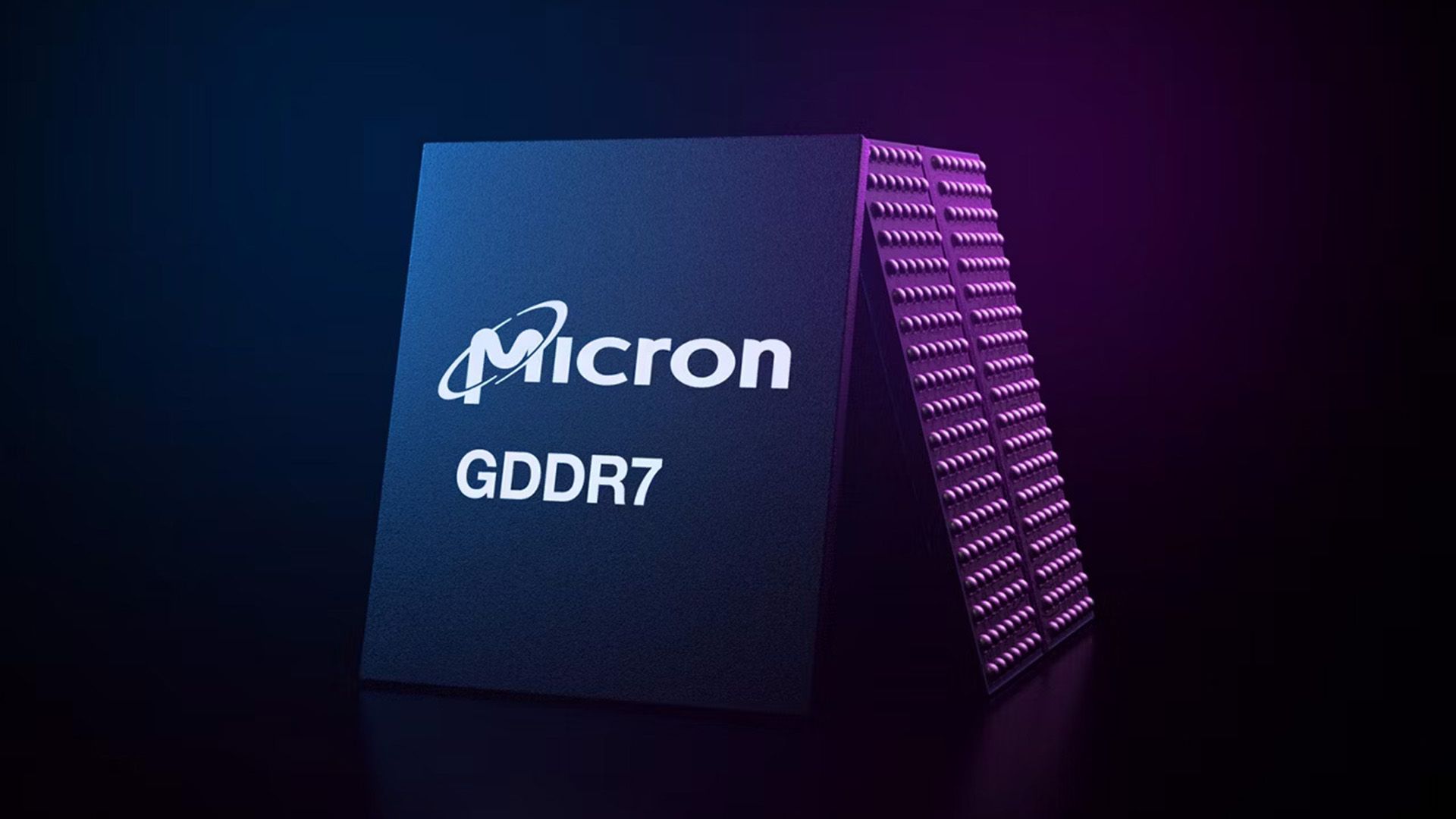
Micron has discontinued its 2GB GDDR7 memory chips for gaming graphics cards and is redirecting that manufacturing capacity toward higher-density memory aimed at AI workloads. The move follows the company's recent entry into supplying 2GB GDDR7 modules to Nvidia earlier this year, a position that placed it behind established suppliers Samsung and SK Hynix.
Because Micron's 2GB module reached only a limited set of Nvidia models, including retail variants of the GeForce RTX 5060, its departure from the segment carries little risk of immediate shortages for US buyers of the standard RTX 50 retail lineup. Samsung and SK Hynix supply the vast bulk of 2GB GDDR7 modules for those cards. Micron's weaker standing in the 2GB segment also made a quick exit a logical step, freeing fabrication capacity for other products.
The company is reportedly turning its attention to 3GB (24 Gb) GDDR7 chips. Those larger packages are seen as impractical for Nvidia's RTX 50 lineup, since they cost more and produce less conventional consumer memory capacities. They do, however, carry higher profit margins and are actively used in Nvidia's high-end RTX PRO Blackwell GPUs, which are built for generative and agentic AI workloads.
Micron's decision fits a broader pattern among memory suppliers, which have been giving priority to AI-facing technologies over consumer and retail products. The company previously exited its Crucial consumer memory and SSD business, stating at the time that surging AI data-center demand had led it to prioritize larger strategic customers in faster-growing segments.
For US consumers, the practical effect appears limited for now, since Samsung and SK Hynix remain the primary sources of 2GB GDDR7 for standard RTX 50 retail cards. The shift instead concentrates Micron's resources on memory destined for AI hardware, where demand and margins are higher. The company has not announced any change to its supply arrangements for the gaming cards that used its 2GB modules, and the exit from that segment is described as a reallocation of fabrication capacity rather than a withdrawal from GDDR7 overall.
More hardware news from TechManNews.