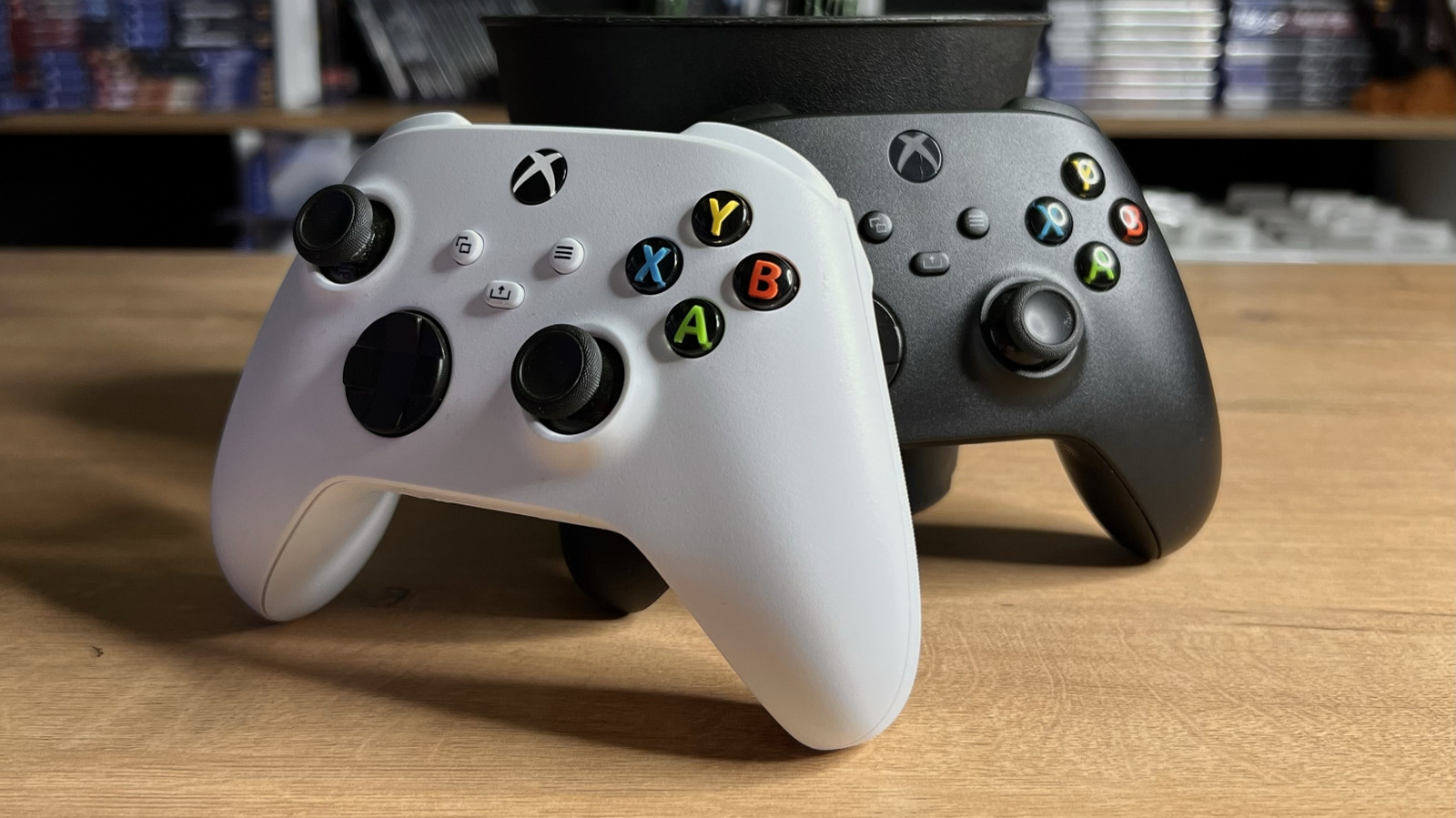
Microsoft’s Xbox controller has undergone significant changes across four console generations, but several core design elements have remained constant since the original console launched in late 2001. The asymmetric analog stick layout and the colored ABXY buttons have persisted for 25 years, and every standard wireless pad released since the Xbox 360 in 2005 has continued to rely on AA batteries, though a separate rechargeable pack is available. The most notable shift came early when Microsoft responded to complaints from the Japanese market by releasing the Controller S in early 2002, a streamlined gamepad that set the design direction for future peripherals.
The Xbox 360 generation marked a major milestone by making wireless controllers mainstream, alongside a quality-of-life upgrade that replaced the original pads’ awkward black and white buttons with the shoulder inputs still used today. That era’s gamepad also introduced a home button for quick dashboard access and became a staple for PC gaming through robust Windows support and Microsoft’s Xinput API. The Xbox One generation brought more subtle refinements, including a more accurate D-pad, Impulse Triggers for rumbling feedback, a 3.5mm headphone jack for easy communication during online play, and Bluetooth support for simpler PC connections.
The latest Xbox Wireless Controller adds a Share button for screenshots and video capture, plus textured grips for longer sessions. It is also praised for its ergonomics and battery life, which outperforms a competing console’s controller by a wide margin. The premium Xbox Elite Wireless Controller Series 2 offers the most features, including four removable rear paddles, adjustable-tension thumbsticks, trigger locks, and full button remapping through the Xbox Accessories app, though it carries a price tag of $200.
The original Xbox gamepad, nicknamed the Duke, was famously oversized, measuring 7 inches wide, 5.5 inches tall, and 2.7 inches thick, and weighing 14 ounces compared to the current controller’s roughly 9.8 ounces. Its size stemmed from the original Xbox console itself, which was aimed at the North American market and weighed 8.8 pounds, paired with a focus on games like Halo: Combat Evolved that targeted older players. The Duke also housed two expansion slots for removable 8MB memory units, which plugged into the controller rather than the console, adding to its bulk.
While the Duke earned a reputation as one of the least elegant gamepads ever made, the Xbox 360 controller is often remembered most fondly by fans. The current standard pad is arguably the best Microsoft has produced for everyday use, and the Elite Series 2 stands out as a feature-rich premium option. Across all these iterations, the core goal has remained the same, but the execution has steadily improved.
More gadget news from TechManNews.