The Thread
Four stories logged on this desk in the last two days look unrelated on their face: a nuclear reactor deal, an IPO cash-out, a chipmaker's valuation milestone, and a software vendor's conference. The pattern connecting them is that the returns of the AI buildout are increasingly being captured by the suppliers and financiers behind the model-makers, not only by the companies selling AI products. Money, market value, and IPO proceeds are all flowing toward physical capacity, silicon, and early shareholders.
Power Becomes the Constraint
Kairos Power, described by TechCrunch as a future Google supplier, has inked a deal with Samsung C&T to help build its first 50-megawatt nuclear power plant, backed by up to $100 million from the Samsung group. The detail that matters is not the dollar figure but the configuration: a company that sells AI services depends on a reactor developer, which in turn depends on a construction and engineering conglomerate, which is itself part of a sprawling industrial group.
The supply chain for AI is no longer contained inside the technology industry. Nuclear generation sits at the base of it, because large-scale computing needs firm, always-on electricity rather than intermittent sources. That pushes AI firms into long-horizon capital projects with regulatory timelines they do not control. It also pulls non-US industrial capital into American technology infrastructure. A Korean group funding a reactor that will serve a US hyperscaler is a reminder that the buildout is being financed internationally and that the bottleneck has shifted from software to steel, concrete, and fuel. For US technology companies, the practical consequence is that their growth plans now depend on partners in heavy industry and on energy siting decisions made far from their own campuses.
Public Markets Are Repricing the Picks and Shovels
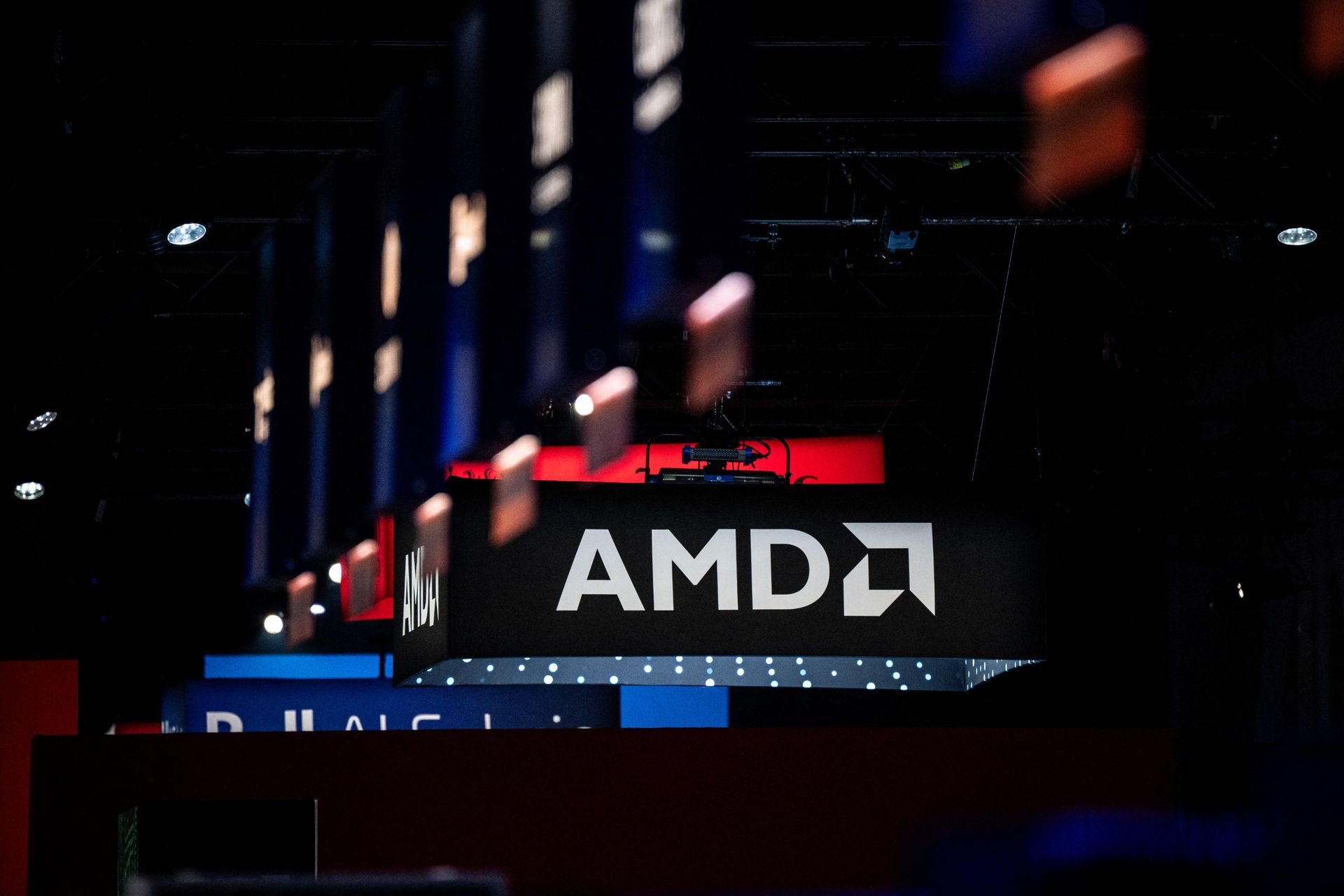
AMD crossed the $1 trillion market cap mark, joining Nvidia, Broadcom, and SK hynix in that tier, according to Tom's Hardware. The story is not simply that a chipmaker did well. It is that the exclusive list of trillion-dollar companies in this cycle is dominated by firms that supply compute and memory rather than firms that consume it.
Note the composition of that group: two US chip designers and a Korean memory manufacturer. The market is valuing the inputs to AI at a scale previously reserved for platform companies with billions of end users. That has implications for the US market specifically. Index concentration deepens when a handful of semiconductor names carry outsized weight. It also means the health of American retirement and retail portfolios is increasingly tied to the capital expenditure plans of a small number of buyers, who are themselves tied to the power and construction constraints described above. AMD beating Intel to that milestone, as Tom's Hardware frames it, is a ranking change inside the American semiconductor industry, but the valuation logic driving it is global.
The Agentic Bet Is a Demand-Side Story
At Dreamforce, Salesforce continued to place its bets on agents, and per SiliconANGLE's account of theCUBE Pod, the strategy appears to be paying off so far. The company announced an AI interface layer called AIforce, and its chief executive, Marc Benioff, shared a stage with Nvidia's Jensen Huang.
The pairing is the tell. A software vendor's flagship event now features a chip executive prominently, because the agentic products Salesforce is selling require enormous inference capacity to function. The same story also noted that Nscale went public, adding another infrastructure name to the public markets. So on the demand side, enterprise software is being repositioned around agents, while on the supply side, capacity is being listed and financed. The two halves of the same trade are showing up in the same news cycle.
For US enterprise buyers, this means the cost of the software they purchase is increasingly entangled with the cost of compute. Agents that run continuously consume resources in a way that seat-based licenses did not, which raises questions about pricing models that the industry has not settled.