Framework's Laptop 12 Shows the Repair Laptop's Real Test
Article

Framework's Laptop 12 Shows the Repair Laptop's Real Test

Framework's 2026 Laptop 12 reviews and a $1,799 RTX 5070 desktop deal point to the same thing: upgradeability is now competing on price and display quality, not just ideology.

JaysuryaOctober 19, 20264 min read

Photo: Engadget

The recent Laptop 12 reviews and a new pre-built desktop deal are usually filed as separate stories, but they describe one problem. Modular, upgradeable hardware is now expected to compete on the same terms as sealed machines, which means its distinctive selling point is no longer enough on its own. For US buyers and the American companies that serve them, the question has shifted from whether repairable design is a good idea to whether it is worth the price of admission.

The Upgrade Path Arrives

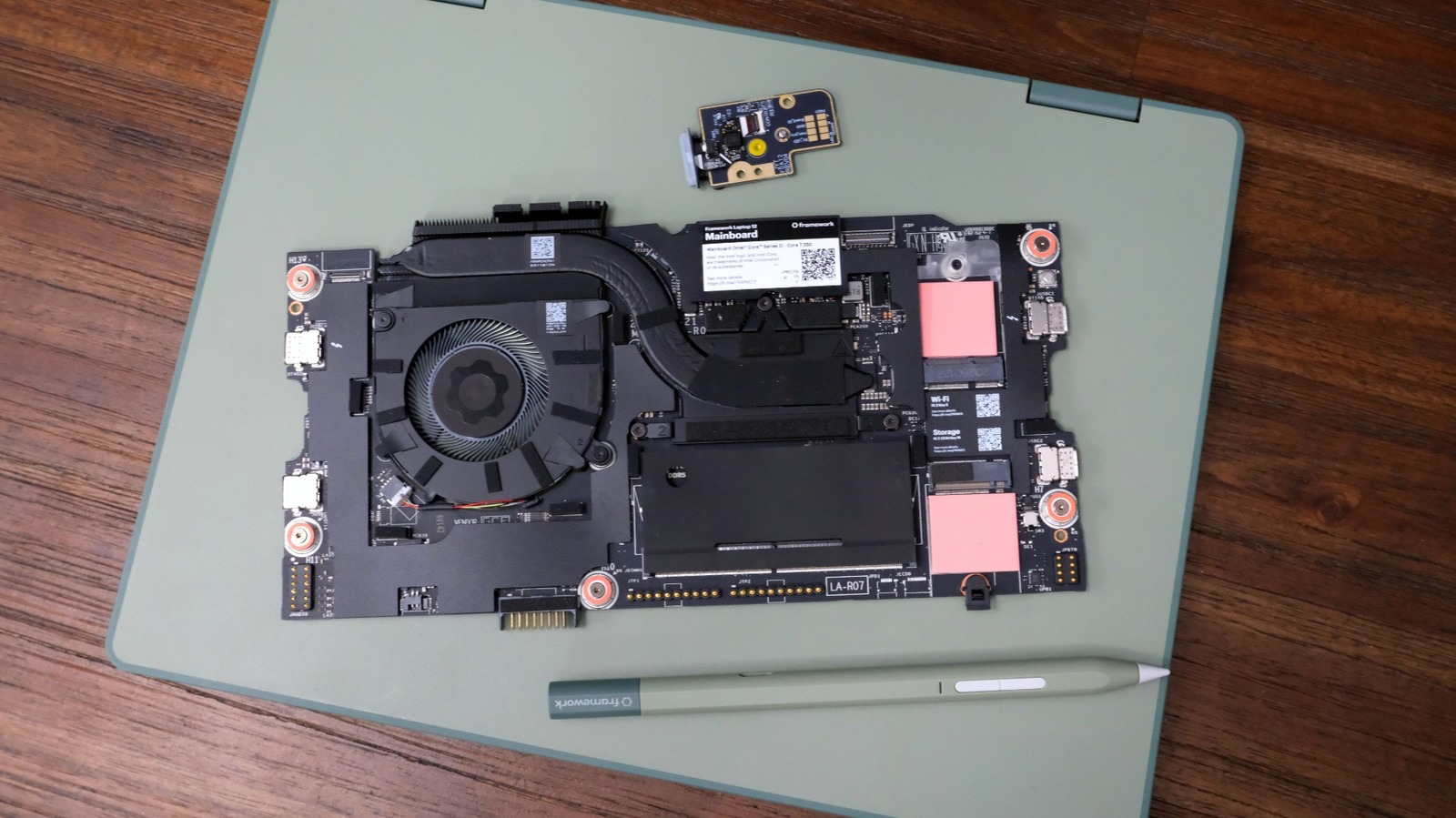
Framework's Laptop 12 has moved a long way from its original pitch. Engadget describes the machine as having been conceived as a Chromebook killer, and its 2026 upgrade puts Intel's Core Series 3 inside. Tom's Hardware frames the same update around Intel's Wildcat Lake on the 18A process. In both readings, the headline is the same: a small, modular laptop now carries a flagship-class chip rather than an entry-level one. That is a meaningful shift for a product line whose argument has always rested on longevity and repair rather than raw performance. A machine that can be upgraded over time only matters if the base configuration is worth keeping, and a stronger processor is what makes the pitch credible for buyers who intend to hold a laptop for years.

The Display Is the Weak Link

Tom's Hardware is blunt about where the 2026 Laptop 12 falls short: poor display performance is a tough sell when prices often reach above $1,000. That single sentence captures the tension running through the modular category. The value of a repairable laptop depends on the buyer staying in the ecosystem long enough to justify it, and the screen is the component a user stares at every day. A processor upgrade addresses the spec that shows up in comparisons; a weak display is felt continuously. For US consumers weighing a four-figure purchase, the math is unforgiving. Modularity promises savings over the life of the machine, but those savings are speculative, while the display compromise is immediate. The reviews do not dispute that Framework has fixed a key flaw, as Engadget puts it; the dispute is whether fixing one flaw is enough at this price.

The Shortage Changes the Calculus

Tom's Hardware anchors its review in what it calls an unprecedented shortage, and that context matters for how the Laptop 12 should be read. Scarcity changes what buyers can demand. When supply is constrained, a machine that can be repaired and upgraded with parts has an appeal that goes beyond environmental or ideological preference: it is a hedge against not being able to replace the whole device. Yet the same shortage also pressures pricing, and a laptop that approaches or exceeds $1,000 is competing against conventional machines that may offer stronger displays and simpler servicing through established channels. Framework's advantage is structural, not promotional. The shortage makes that structure more attractive while simultaneously making its price harder to absorb.


The Pre-Built Counterargument

The desktop deal logged by Tom's Hardware makes the contrast concrete. A Newegg offer on an ABS Flux II Aqua gaming PC puts an RTX 5070 machine at $1,799.99, a $500 saving, with a 20-core Intel Core i7-14700F, a 1TB SSD, and 32GB of DDR5 memory. That is a complete 1440p and 4K-capable system for well under $2,000. The comparison is not apples to apples, since a desktop and a small modular laptop serve different jobs. But it illustrates the price environment US buyers face. A pre-built tower with a discrete GPU and generous memory now sits at a price point that makes a four-figure ultraportable look expensive by default. Modular laptops are not competing only against other laptops; they are competing against the entire market of what a given budget can buy.

What This Means for US Buyers

For American consumers, the practical takeaway is that repairability has become a feature to price rather than a reason to overlook weaknesses. The Laptop 12's 2026 upgrade answers the performance objection, and Engadget's framing suggests the machine can now function as a grown-up computer rather than a secondary device. But the display concern raised by Tom's Hardware is the kind of compromise that shows up in daily use, and at prices above $1,000 it is a real obstacle. Buyers who value long service lives and part replacement have a clearer case than before; buyers who simply want the best screen and the most performance per dollar have little reason to pay a premium for modularity alone.

What This Means for US Companies

For US technology companies, the lesson runs in both directions. Framework's approach shows that a small vendor can iterate on a modular platform and move it upmarket, which is a genuine competitive threat to the sealed-design incumbents that dominate the domestic laptop market. At the same time, the reviews show the limits of that strategy. A modular vendor has to match conventional machines on the components buyers notice most, and it has to do so while absorbing the cost of a parts ecosystem. The desktop deal is a reminder that the pre-built channel remains aggressive on price, and that pressure flows upward into every laptop decision. Companies betting on repairability as a differentiator should expect scrutiny of the whole machine, not just its upgrade path.

What to Watch

The next signal is whether the display criticism attached to the Laptop 12 turns into a design change, since Tom's Hardware identifies it as the main obstacle at current pricing. Also worth watching is how Framework prices the 2026 configuration against the pre-built desktop market that Tom's Hardware shows discounting aggressively. Engadget's read that the Core Series 3 fixes a key flaw is the strongest argument the modular category has had; whether that argument holds depends on the parts buyers cannot upgrade away.

More on this beat: Gadgets on TechManNews.

#Framework#modular laptops#Intel#gaming PCs#US consumer tech#laptop reviews

Newsletter

Get Tech News in Your Inbox

The latest AI, gadgets, software and startup stories from TechManNews, delivered every morning - free.